Mughals, the name derived from a Persian word Mongol. It is pronounced as Mughal or Moghul. The central Asian tribe after Mongolia. This article is about the history of the Mughals. Moreover, I’ll try to summarize different emperors of Mughal history.

The Mughal empire originated from Central Asia and started from the Mongol ruler named Jenghiz Khan and Tamburlaine (Timur), who were the great conquerors of Asia. Undoubtedly, they were extremely proud of their ancestry. Moreover, the assault of Timur on India triggered the Babur to invade.
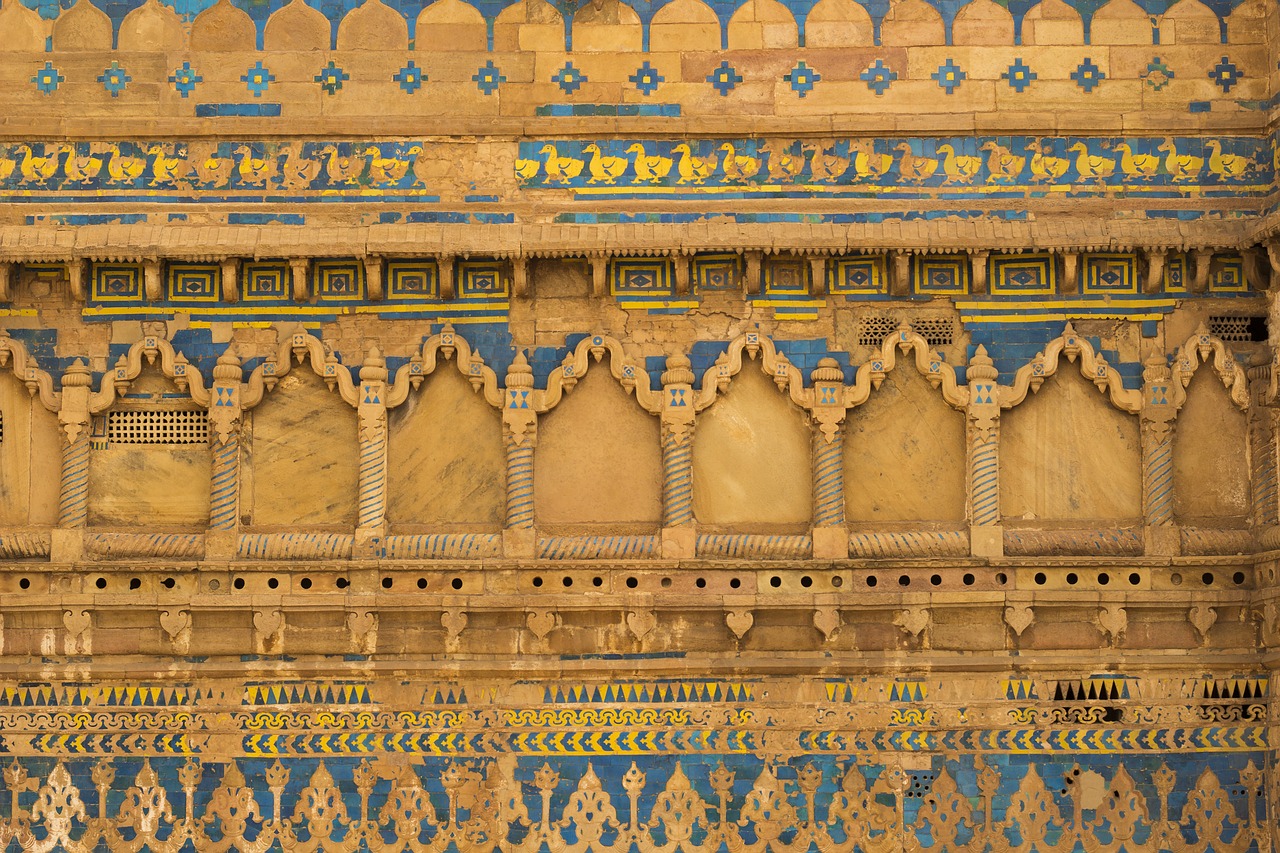
Evidently, they conquered Asia and made Asia its powerful kingdom. It was the time of the seventeenth century. Their main focus was on some cities and they built them as per their desire. The main cities were Agra, Delhi, and Lahore. In addition, these cities still have their remarkable architectures and their memorable buildings which are associated with the Mughal dynasty.
The Great Mughals of the History | Mughal Emperors
Babar (1526 – 1530)
Humayun (1530 – 1556)
Akbar (1556 – 1605)
Jahangir (1605 – 1627)
Shah Jahan (1627 – 1658)
Aurangzeb (1658 – 1707)
Babur – The great first Mughal Emperor

Zahir-ud-din Babur was the first great Mughal emperor who was born in Uzbekistan. He conquered Kabul and became the ruler of Kabul (Afghanistan). It was the time where the kingdom of Lodi Afghans invaded North India (1556). He established a Mughal dynasty in Northern India which ruled for three centuries. Most historians said that Babur was a down to earth man who was famous for his modesty. He is buried in Kabul Afghanistan. Moreover, Bagh-e-Babur is the place where this man is buried and that park is named after this first Mughal Emperor.
Humayun – Known for bringing Art to Asia

(Source: Wikipedia)
Humayun the son of Babur his real name was Nasir-ud-Din Muhammad born on March 6, 1508. The second ruler of a Mughal Empire. He ruled present-day Pakistan, Afghanistan, Bangladesh, and Northern India. Unlike his father, he lost the kingdom earlier but then with the help of the Safavid dynasty he regained his territory with more power and additional land. Famous for bringing famous art. He is credited for bringing Iran’s top artists to Asia and set-up the first Mughal’s Painting Studio. This lord of kingdom died on January 27, 1556, and buried at Humayun’s Tomb in present Delhi India.
Akbar – Famous for his Religious Tolerance Policy
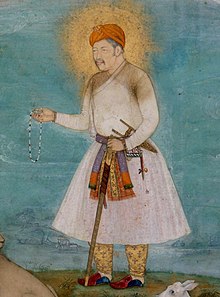
Abu al Fath Jalal-ud-din Muhammad Akbar was born in October 1542. The successor of Humayun has made his mark in Asia and became the third Mughal Emperor. A strong character and powerful general, he expanded the Mughal territory in the Indian subcontinent. He had a strong army and better power than his ancestors. Moreover, this emperor had the credit of making the Mughal empire strong in sense of military, culturally, economically, and politically. He is also known for his religious tolerance policies. Allowed other religions to do their worship fearlessly. That was the main reason for his success over Asia. He also promoted the local Indian artists with the touch of Persian art techniques.
Moreover, the Akbar was a military innovator, a powerfully experienced diplomat, and a magnificent administrator. He died on October 27, 1605, and ruled the vast empire for half a century. Died on October 27, 1627, and was buried in “Shahdra Bagh” Lahore.
Jahangir – Introduced the Gold Chain of Justice

(Source: Wikipedia)
Nur ud din Muhammad Salim, the fourth emperor of the Mughal Empire. Born on August 31, 1569, and ruled the empire from 1605 till his death. Jahangir introduced the culture of banning hazardous things and their manufacturers. Jahangir banned the manufacturers of drugs and wine. He also introduced a “gold chain of justice” which was considered as the link between the ruler and his people. In 1615, Jahangir signed a commercial treaty with the British empire. Undoubtedly, known for his justice and powerful political policies. No doubt, he was a great leader. He died during a journey from Kashmir to Lahore, in Bhimber.
Shah Jahan – Known for the grand legacy of architectures
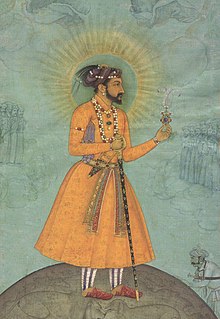
( Source Wikipedia)
Shahab ud din Muhammad Khurram (Shah Jahan) the fifth emperor of Mughals. Born on January 5, 1592, and governed from 1628 to 1658. Shah Jahan was famous for its great architectural achievements. His reign was also known as the Gold age of Mughal architectures. Moreover, his architectures were remarkable for the era. Taj Mahal in Agra is also built in the reign of Shah Jahan. Decidedly, he made that mahal for his wife where he entombed her. Indeed, he was more into art and architecture instead of conquering. In addition, he also had some precious stones worth 23% of the world’s GDP during his reign. Therefore, he often consider the wealthiest Indian in history. In September 1657, Shah Jahan became sick which set a war between his successors. In conclusion, Aurangzeb became the Victorian and became the sixth emperor of the great Mughal empire.
Aurangzeb – The last Mughal Emperor
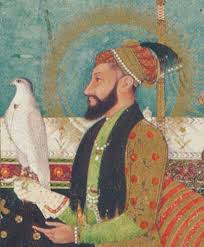
He was the sixth emperor of the great Mughal empire. Muhi-ud-din Muhammad has ruled the Indian subcontinent for 49 years. His reign started from 1658 until his death. During his reign, he expanded the Mughal empire in a great manner. Surely, he was more into war. Undoubtedly, he conquered the South and expanded the Mughal territory up to 3.2 million square kilometers. Surely, Aurangzeb Alamgir was a good tutor and aspiring. In addition, he was a religious person and also memorized the Holy Quran. Unlike his predecessor was not into a luxurious life. Evidently, he worked for his religion and built small mosques on his own limiting his expenses.
Conclusion
After the death of Aurangzeb on March 3, 1707, the decline of the Mughal empire has started and the great Mughal time went to an end. In 1858 the British empire formally tear down the great Mughal empire. No doubt they have left a mark in history. Moreover, different emperors had different mindsets and different personalities. But one can learn from history that great empires may also decline. In conclusion, history is always a lesson for the present rulers. It’s like an old person having loads of experience and inviting you to learn from his life. Learn from history and make your life worthy.
In addition, Covid19 second waves in there, read this article for precautionary measures. Visit website for more articles.