
Tight, flaky, itchy skin in the cold months happens because the outer layer of skin loses water faster than it can hold on to it. Cold air, wind, gas heaters, long hot showers and harsh soap all speed that loss. For winter dry skin, dermatology bodies recommend a simple routine: shorter, warm showers, a gentle cleanser, and a thick cream or ointment smoothed on while the skin is still damp. See a doctor if it cracks, bleeds or won’t settle.
Why does skin dry out when the weather turns cold?
Dry skin is water loss from the outermost layer of the skin, and winter stacks up the conditions that cause it. MedlinePlus, from the US National Library of Medicine, names cold, dry winter air and dry indoor air from heating. Mayo Clinic’s patient guide, republished by Mosaic Life Care, adds low-humidity climates, long or frequent baths, and harsh soaps and detergents.
In Pakistan, winter on the plains brings its own mix. The Punjab government’s Lahore Division climate page describes a foggy winter from mid-November to mid-February, with January the coolest month. Fog mornings feel damp, which is misleading: the skin still suffers once you come indoors to a gas heater and a hot shower. If hazy days bother your lungs as well, our guide to smog and AQI levels in Pakistan covers that side of winter.
Some people lose more water than others. Mayo Clinic says the risk rises after 40, and in jobs that keep the hands wet or use harsh soaps, such as nursing, hairstyling and dishwashing. Bathing more than once a day can also strip the skin’s natural oils. In our view, the same logic applies if you wash your hands, face and feet several times a day for wudu, so moisturising after washing matters more.

A 7-step routine for winter dry skin
The skincare routine that dermatology bodies agree on is short: less hot water, less soap, more moisturiser. The steps below come from the American Academy of Dermatology (AAD), the NHS and Mayo Clinic.
- Keep showers to 5 to 10 minutes in warm water, not hot. Close the bathroom door so the steam stays in, and bathe no more than once a day.
- Use a mild, fragrance-free cleanser, and only where you need it. Use just enough to lift dirt and oil, mainly on the armpits and groin, without a thick lather.
- Pat yourself dry with a towel. Rubbing irritates very dry skin.
- Put on moisturiser within minutes, while the skin is still damp. This traps the water the shower left behind.
- Moisturise again during the day, every time you wash your hands and whenever your skin feels tight.
- Cover up outdoors. Mayo Clinic suggests gloves, a scarf and a hat against cold wind; next to the skin, the AAD prefers loose cotton, because wool and polyester can irritate dry skin.
- Keep using sunscreen. Winter sun still reaches your face and hands, so the AAD recommends a broad-spectrum product with SPF 30 or higher.
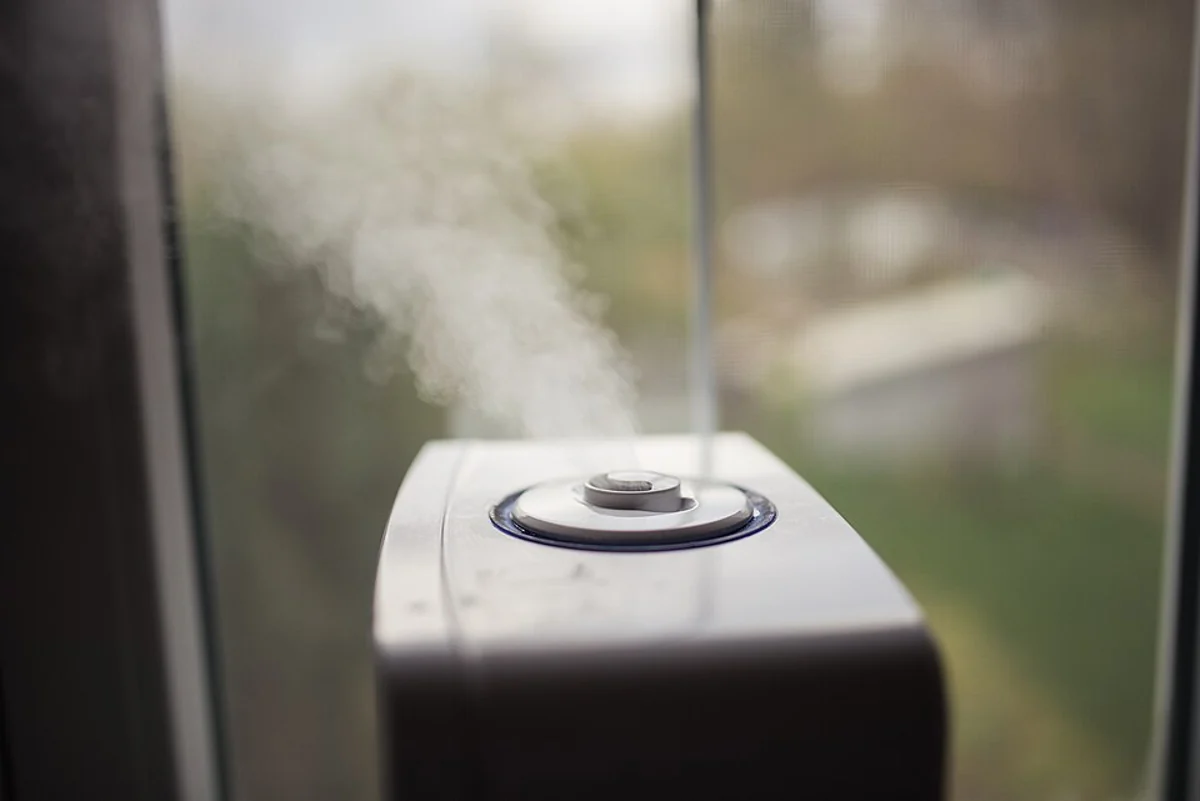
If you keep only one step, we’d make it step 4; the rest mostly stop you losing water you’ve just put back. If you can, also run a humidifier in the bedroom overnight, as the AAD suggests. Clean it often, because a dirty tank can grow mould.
Which moisturiser works best: ointment, cream or lotion?
For dry skin in winter, a cream or an ointment does more than a lotion. The AAD says creams and ointments are more effective, and the NHS explains why in its guide to emollients, its word for medical moisturisers.
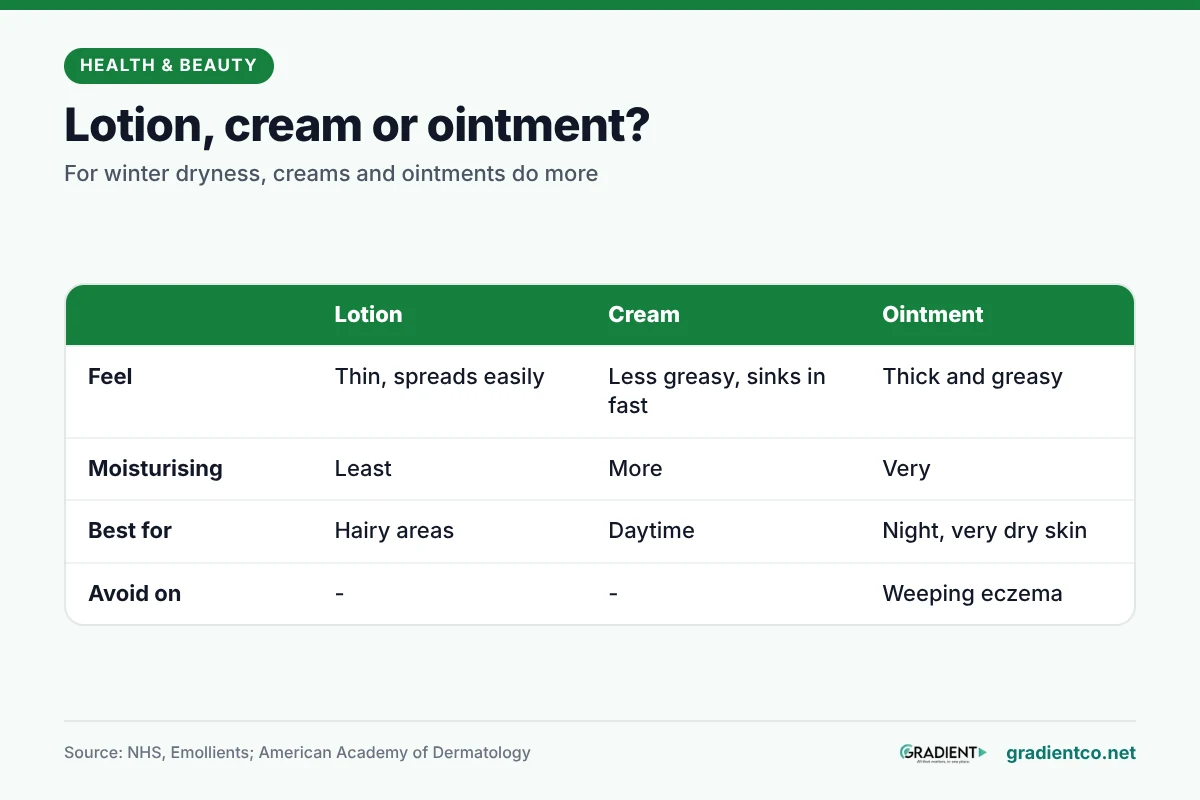
Lotions are thin and spread easily, so they suit hairy areas, but they moisturise least. Creams are less greasy and sink in fast, which makes them good for daytime. Ointments are thick and very moisturising, so the NHS says they are often used at night for very dry skin, though not on weeping eczema.
Two habits from the British Association of Dermatologists (BAD) are worth copying. Smooth the product on in the direction your hair grows, so it doesn’t clog the follicles. Keep using it every day, even when the skin looks fine.
Whichever you choose, pick a fragrance-free one. The AAD warns that “unscented” isn’t the same thing: unscented products can contain chemicals that mask smell and irritate sensitive skin.
What do glycerin, urea and petroleum jelly actually do?
Read a moisturiser’s label and you’ll usually find two kinds of ingredient: one that pulls water into the skin and one that seals it in. A third kind softens the surface. A 2016 review in the Indian Journal of Dermatology by Sethi and colleagues explains how each type works.
| Ingredient type | What it does | Examples (AAD, MedlinePlus, the review) | The catch |
|---|---|---|---|
| Humectant | Draws water into the outer layer of skin | Glycerin, urea, lactic acid, hyaluronic acid | Can pull water up from deeper skin, which is then lost if nothing seals it |
| Occlusive | Forms a film that stops water escaping | Petrolatum (petroleum jelly), mineral oil, lanolin, dimethicone | Greasy feel, and some people react to them |
| Emollient | Fills gaps between skin cells so skin feels soft | Ceramides, cholesterol, fatty acids, squalane | Wears off: the review says the effect peaks within an hour and lasts about 4 hours |
Glycerol (glycerin) is the most effective humectant, by the review’s account, but humectants are also “a double-edged weapon”: that’s why good products pair them with a sealing ingredient.
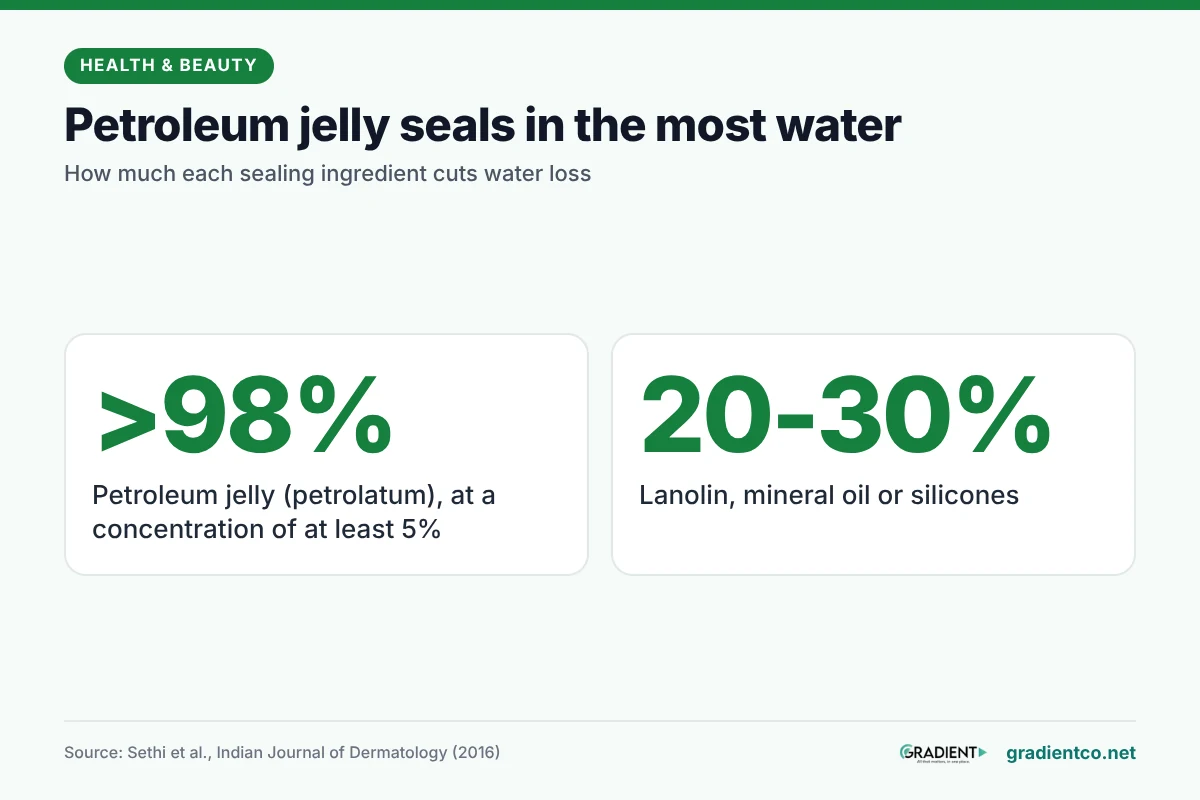
Petroleum jelly is the strongest seal. The review reports that petrolatum at a concentration of at least 5% reduces water loss from the skin by more than 98%. Lanolin, mineral oil and silicones cut it by only 20 to 30%. We think that makes a thin layer of plain petroleum jelly at night a sensible choice for very dry patches, if you can live with the shine.
How do you care for cracked lips and hands?
For lips, the AAD suggests a lip balm or petroleum jelly. If a balm stings or tingles, switch to another, because that feeling is irritation, not proof it is working.
For hands, keep a non-greasy hand cream near the sink, in your bag or at your desk, so step 5 is easy to keep. Wear gloves for washing dishes. If your feet crack at the heels, a urea cream, which MedlinePlus names for dry skin, is worth asking a pharmacist about.
Which habits make dry skin worse?
Some everyday products undo the routine above, whatever moisturiser you use. While your skin is dry, the AAD advises avoiding three things: products with alcohol (hand sanitiser is the exception), anything with fragrance, deodorant soaps included, and retinoids. Mayo Clinic adds over-scrubbing to the list.
Two less obvious habits to drop:
- Aqueous cream as a moisturiser. If you’ve used it for years, this one may surprise you: the NHS no longer recommends it because its sodium lauryl sulphate can irritate skin.
- Moisturiser near an open flame. The NHS warns that clothes, bedding and dressings carrying emollient residue catch fire more easily, whether or not the product contains paraffin. If you sit close to a gas heater, keep a safe distance and wash clothes and bedsheets regularly.
One more risk, from the BAD: emollients make the bath or shower floor very slippery. A non-slip mat helps, especially for older relatives, and our osteoporosis guide explains why a fall matters more for them.
When does dry skin need a doctor?
Most winter dry skin is harmless, but some signs need a doctor rather than another cream. Book an appointment, Mayo Clinic advises, if:
- the dryness lasts despite self-care;
- skin is inflamed or painful (Mayo notes irritation shows as redness on white skin but can look greyish on brown skin, so do not wait for redness);
- the discomfort costs you sleep or distracts you from daily life;
- open sores or infections develop where the skin has broken open;
- large areas are scaling or peeling.
Cracks matter because they let bacteria in, and Mayo warns that untreated dryness can turn into eczema (atopic dermatitis). Dryness that does not respond to care can also be a sign of psoriasis or even kidney disease, the AAD says. Ask a dermatologist before trying anti-itch creams, and tell them if any moisturiser burns or stings.
Frequently asked questions
Do I really need sunscreen in winter?
Yes. Clouds and fog don’t remove the need: Mayo Clinic advises wearing it even on cloudy days and reapplying every two hours when you are outside.
How often should I moisturise when my skin is very dry?
The NHS says at least three or four times a day for dry skin conditions, with extra care for hands and face. You can’t really overdo it, as emollients are very safe.
Can a moisturiser replace soap for washing?
Often, yes. The BAD says most emollients can be used instead of soap; the NHS suggests mixing about a teaspoonful with a little warm water, spreading it on, then rinsing.
Is winter dry skin the same as eczema?
No. Eczema (atopic dermatitis) is a skin condition with its own treatment plan, and the AAD lists it among the conditions that dryness resistant to home care can point to.
What we do not know yet
As of October 2026, we could not open the Pakistan Meteorological Department’s humidity records, so we cannot give official winter humidity figures for Lahore, Islamabad or Peshawar. We found no dermatology body that backs popular home remedies for winter dry skin such as desi ghee or rosewater-glycerine mixes, so we have left them out. We also found no study on whether hard water in Pakistani cities makes dry skin worse.
This article is general information, not medical advice. Talk to a doctor before changing your diet, exercise or medication.
Read next: Flu vaccine in Pakistan and the best time to get the shot before winter peaks.
Researched and drafted with AI assistance; facts checked against the sources linked in this article.