
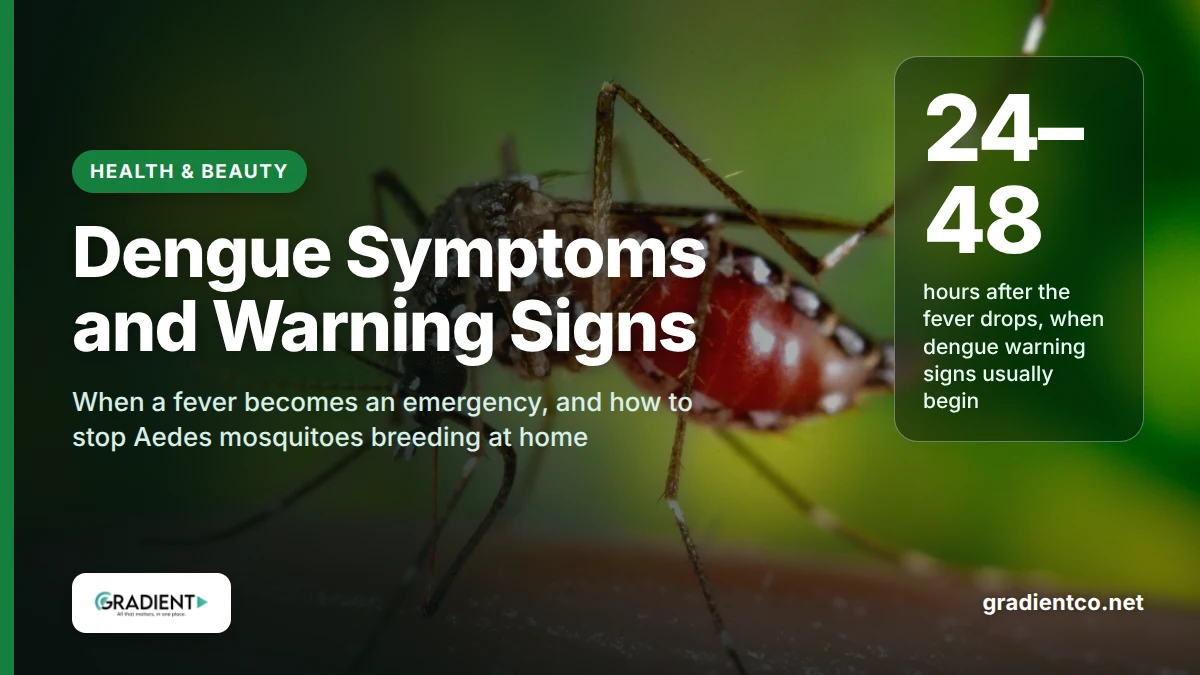
The main dengue symptoms are a sudden high fever with a severe headache, pain behind the eyes, and muscle, joint or bone pain, sometimes with vomiting or a rash. They usually start 4 to 10 days after an infected mosquito bite and last 2 to 7 days. The dangerous phase often comes 24 to 48 hours after the fever drops: belly pain, repeated vomiting or bleeding gums mean hospital now.
What are the first dengue symptoms?
A sudden high fever is the first sign, and the World Health Organization’s dengue fact sheet puts it at around 40°C (104°F). The fever comes with a severe headache, pain behind the eyes, muscle and joint pain, nausea, vomiting, swollen glands or a rash.
Pakistan’s National Institutes of Health (NIH) adds weakness, a sore throat and an altered sense of taste in its October 2024 dengue advisory. The muscle and bone pain can be so strong that dengue is also called “break-bone fever”.
Many infections cause no dengue symptoms at all. The US Centers for Disease Control and Prevention (CDC) says about one in four infected people get sick, and most recover in about a week.

| Dengue at a glance | What official sources say |
|---|---|
| Time from bite to first symptoms | Usually 4 to 10 days (WHO); 3 to 14 days, commonly 4-7 (NIH) |
| How long symptoms last | 2 to 7 days |
| When warning signs appear | Usually 24 to 48 hours after the fever goes away (CDC) |
| How many who get sick develop severe dengue | About 1 in 20 (CDC) |
| Who spreads it | Female Aedes mosquitoes, which bite during the day (WHO) |
| How it is confirmed | A blood test; NS1 antigen shows from day 1 to day 7 of illness (NIH) |
| Peak season in Pakistan | Post-monsoon, September to November (NIH advisory, October 2024) |
Which dengue warning signs mean you need a hospital?
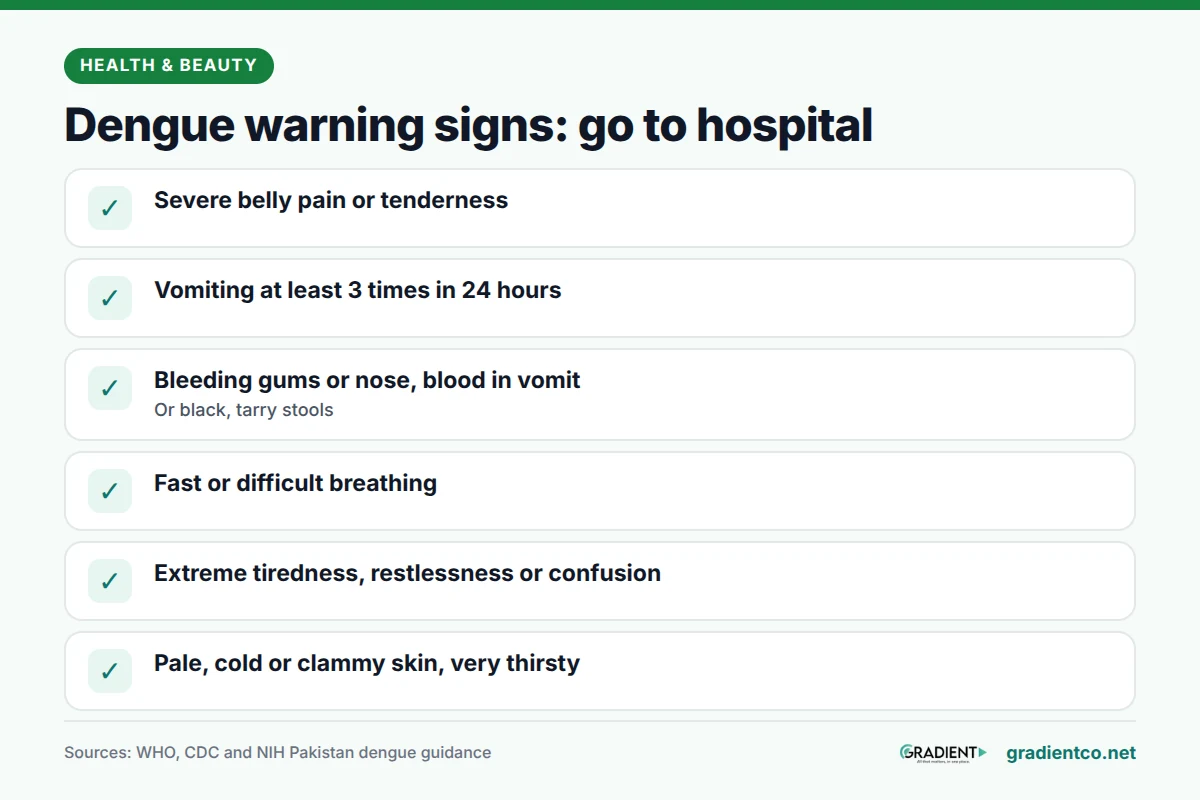
Go to a hospital or emergency room at once if any of these dengue warning signs appear. The list combines the signs published by the WHO, the CDC and the NIH:
- Severe belly pain or tenderness
- Vomiting that keeps coming back: the CDC’s threshold is at least 3 times in 24 hours
- Bleeding from the gums or nose, blood in vomit, or black, tarry stools
- Red spots or patches on the skin
- Fast breathing or difficulty breathing
- Feeling extremely tired, restless, irritable or confused
- Pale, cold or clammy skin, being very thirsty, or feeling weak
The timing catches families out. The CDC says warning signs usually begin in the 24–48 hours after the fever has gone away, so a patient who seems to be recovering can suddenly get worse. The NIH advisory says patients with these signs “must be referred to hospital”.
Doctors also watch the platelet count. NIH lists a count below 100,000/mm3 among its warning signs, which is why your doctor may ask for repeat blood tests. With early detection and good care, NIH says the death rate can be brought below 1%.
When is dengue season in Pakistan?
Cases rise sharply after the monsoon, from September to November, according to the NIH advisory. Cases start appearing from April to June, and they surge when temperatures stay at 26-29°C for 3-5 weeks with humidity around 60%. Pakistan recorded 21,016 confirmed cases of dengue fever in 2023, the advisory says.
An NIH virology study published in PLoS One in 2026 found the same pattern from 2021 to 2025: most infections fell between August and October, peaking in September and October. Rawalpindi and Islamabad supplied most of its confirmed samples.
Dengue in Pakistan has followed the same pattern this season. As of 3 October 2026, the Khyber-Pakhtunkhwa Health Department had recorded 8,905 cases this year, 2,175 of them laboratory-confirmed, and declared Kohat high-risk after 1,347 cases there, the Express Tribune reported. Rawalpindi’s Health Department has declared the period until November 15 the most critical phase of the season, according to the same paper.
Who is at higher risk of severe dengue?
People catching dengue for the second time face the greatest risk, the WHO says. There are four types of dengue virus, and recovering from one protects you for life against that type only. NIH says a later infection with a different type raises the risk of dengue haemorrhagic fever and dengue shock syndrome.
That matters for dengue in Pakistan because more than one type circulates. In the NIH study, DENV-2 made up 78.5% of confirmed samples and DENV-1 21.4%, and DENV-1 dominated in 2023 before DENV-2 returned. In our view, anyone who has had dengue before should treat a new high fever in the peak months with extra care and see a doctor early.
What should you do if you think you have dengue?
See a doctor as soon as dengue symptoms start, as the CDC advises. Only a blood test confirms dengue, and the NIH advisory says the NS1 antigen test works from the first day of symptoms up to day 7.
Do not take aspirin or ibuprofen for a suspected dengue fever. The WHO, the CDC and NIH all warn against these painkillers; NIH gives the reason as the risk of bleeding complications, plus the potential risk of Reye’s syndrome in children. Ask your doctor which medicine to use for fever and pain, and keep drinking fluids, which NIH advises to avoid dehydration. For everyday eating once you have recovered, see our guide to six essential food intakes.
Dengue is a viral infection, and NIH says there is no specific antiviral treatment, so leftover antibiotics from the medicine cabinet will not help. Our explainer on the era of antimicrobial resistance shows why taking antibiotics without a prescription does harm.
Keep anyone with dengue symptoms away from mosquitoes. The CDC says the virus is in the blood during the first week of illness and can pass to a mosquito that bites the patient. NIH asks hospitals to use insecticide-treated bed nets for dengue patients to stop the spread to other people.
How do you stop Aedes mosquitoes breeding at home?
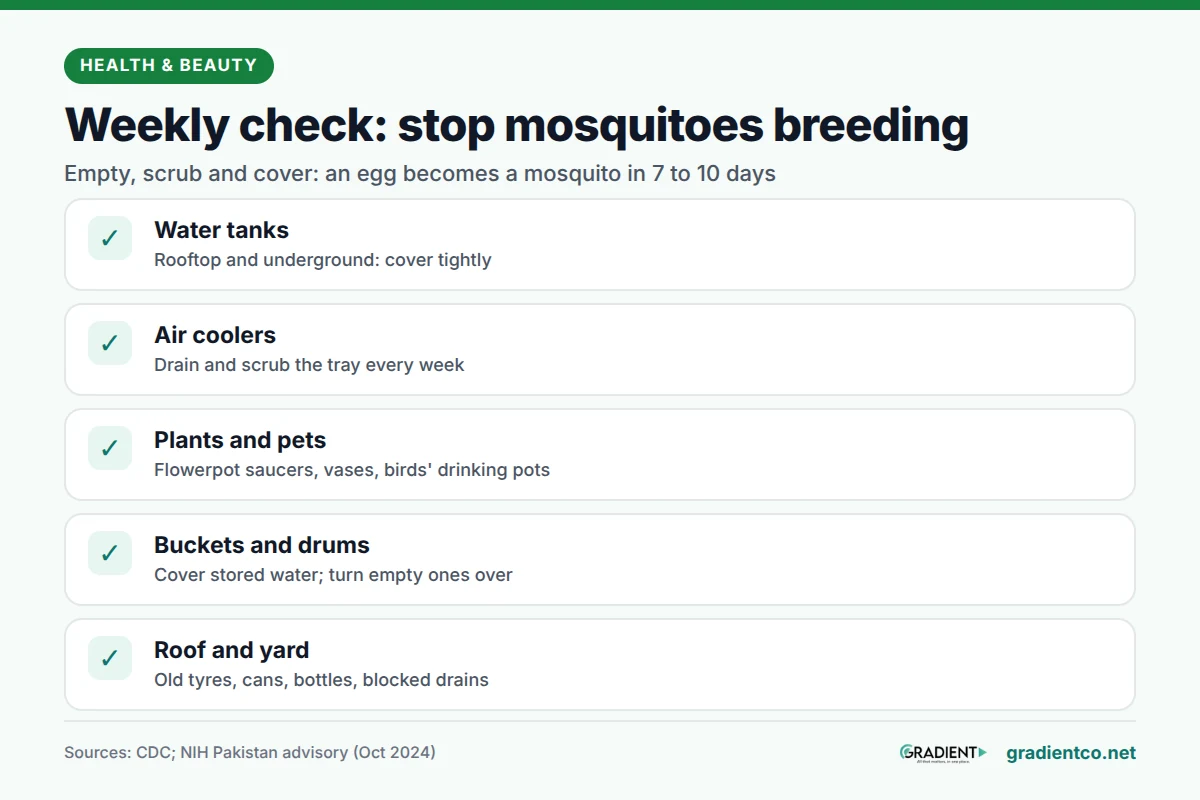
Empty, scrub and cover every container that holds water, once a week. That one routine breaks the mosquito’s life cycle: the CDC says an Aedes mosquito egg takes 7 to 10 days to become an adult, so weekly cleaning removes the next batch before it can fly.
The eggs stick to the inside walls of containers just above the waterline, “like glue”, and can survive drying out for up to 8 months. Tipping the water out is not enough; scrub the sides as well. The NIH advisory asks for the same weekly routine for household water storage.
- Water tanks: NIH lists rooftop and underground tanks among the first places to check, and the CDC’s home mosquito-control guide says to cover stored water tightly so mosquitoes cannot get in.
- Air coolers: drain and scrub the cooler tray every week, or empty it if you have stopped using the cooler for the season.
- Plants and pets: empty flowerpot saucers, vases and birds’ drinking pots, and refill them with clean water.
- Buckets and drums: cover stored water; turn empty buckets, tubs and pots upside down.
- The roof and yard: throw out old tyres, cans, bottles and broken appliances, and clear blocked drains where water pools.
- Report it: if a neighbouring plot or construction site has standing water, tell your local health department.
The scale of the problem is real. In Rawalpindi this season, as of 3 October 2026, 1,400 teams inspected 5.17 million houses and found dengue larvae in 176,144 of them, the Express Tribune reported: roughly one house in 29. Aedes mosquitoes also fly only a few blocks in their lifetime, the CDC says, so the mosquitoes biting your family most likely bred close to your home.
How can you avoid dengue mosquito bites?
Protect yourself during the day, because the WHO says the mosquitoes that spread dengue are day-biters. The NIH advisory, the WHO and the CDC recommend these steps:
- Wear long-sleeved shirts and long trousers that cover as much skin as possible.
- Use a repellent containing DEET, picaridin or IR3535, as listed by the WHO, and follow the label.
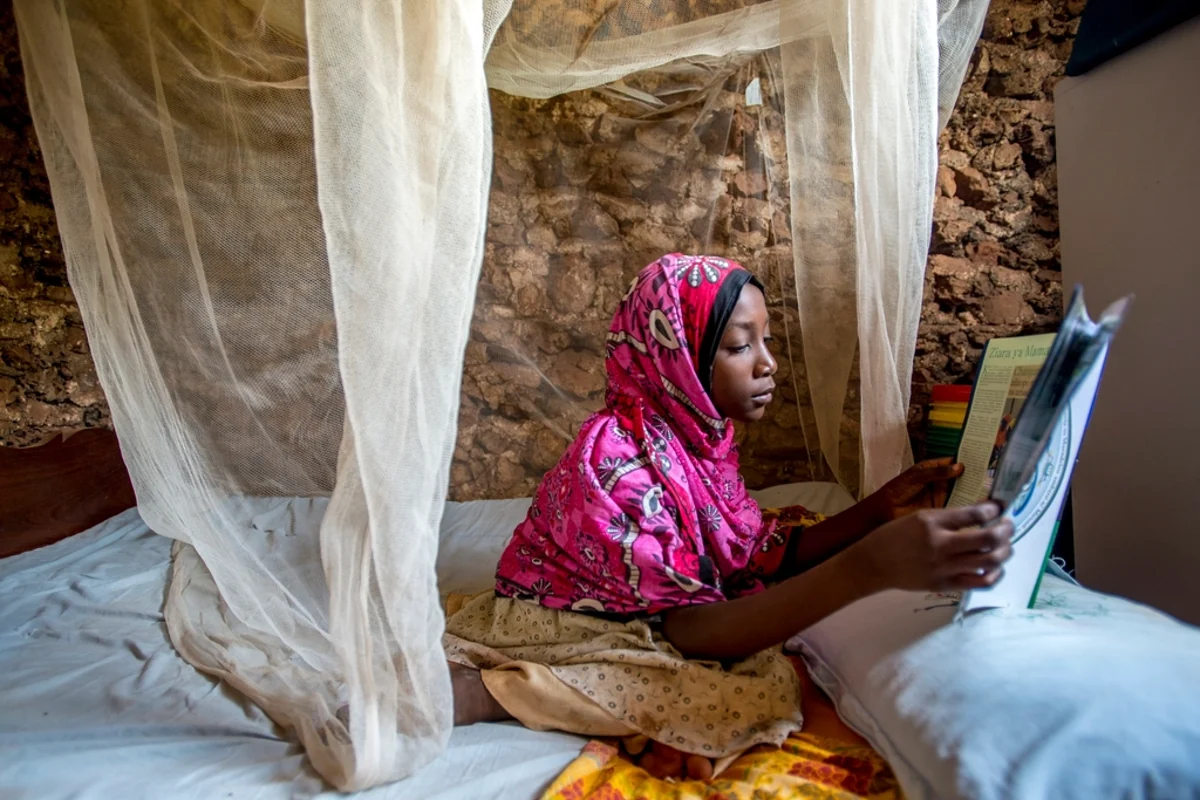
- Sleep under a mosquito net, ideally one sprayed with insect repellent, the WHO says, including for daytime naps.
- Fit mesh screens on windows and doors, and do not leave doors propped open.
- Use mosquito repellent coils or vaporizers indoors.
The WHO notes that one dengue vaccine, QDenga, is licensed in some countries and recommended only for ages 6–16 in high-transmission areas. We could not find official guidance on its use in Pakistan, so in our view prevention at home remains the main defence.
Frequently asked questions
What are the early dengue symptoms?
A sudden high fever of around 40°C with a severe headache, pain behind the eyes, and muscle, joint or bone pain. Nausea, vomiting, swollen glands and a rash are also common. Symptoms usually start 4 to 10 days after the bite and last 2 to 7 days.
When is dengue most dangerous?
Often after the fever breaks. The CDC says warning signs usually appear 24 to 48 hours after the fever goes away, so dengue warning signs such as belly pain, repeated vomiting, bleeding or extreme tiredness at that point need a hospital at once.
Can you get dengue twice?
Yes. There are four types of dengue virus, and recovering from one protects you only against that type. The WHO says a second infection carries a greater risk of severe dengue.
Which painkillers should be avoided in dengue?
The WHO, the CDC and Pakistan’s NIH all say to avoid aspirin and ibuprofen during dengue fever; NIH cites the risk of bleeding complications. Ask a doctor which medicine to take for fever and pain.
When does dengue season end in Pakistan?
The NIH says cases rise most in the post-monsoon months of September to November. Rawalpindi’s Health Department has called the period until November 15, 2026 the most critical phase of this season.
What we do not know yet
We could not find a single official count of dengue cases for all of Pakistan or for Punjab in 2026, or a 2026 outlook from the Pakistan Meteorological Department. Punjab’s health helpline page did not load while we researched this article, so we have not listed a number for it.
This article is general information, not medical advice. Talk to a doctor before changing your diet, exercise or medication.
Read next: The era of antimicrobial resistance, on why antibiotics are not the answer to every fever.
Researched and drafted with AI assistance; facts checked against the sources linked in this article.